
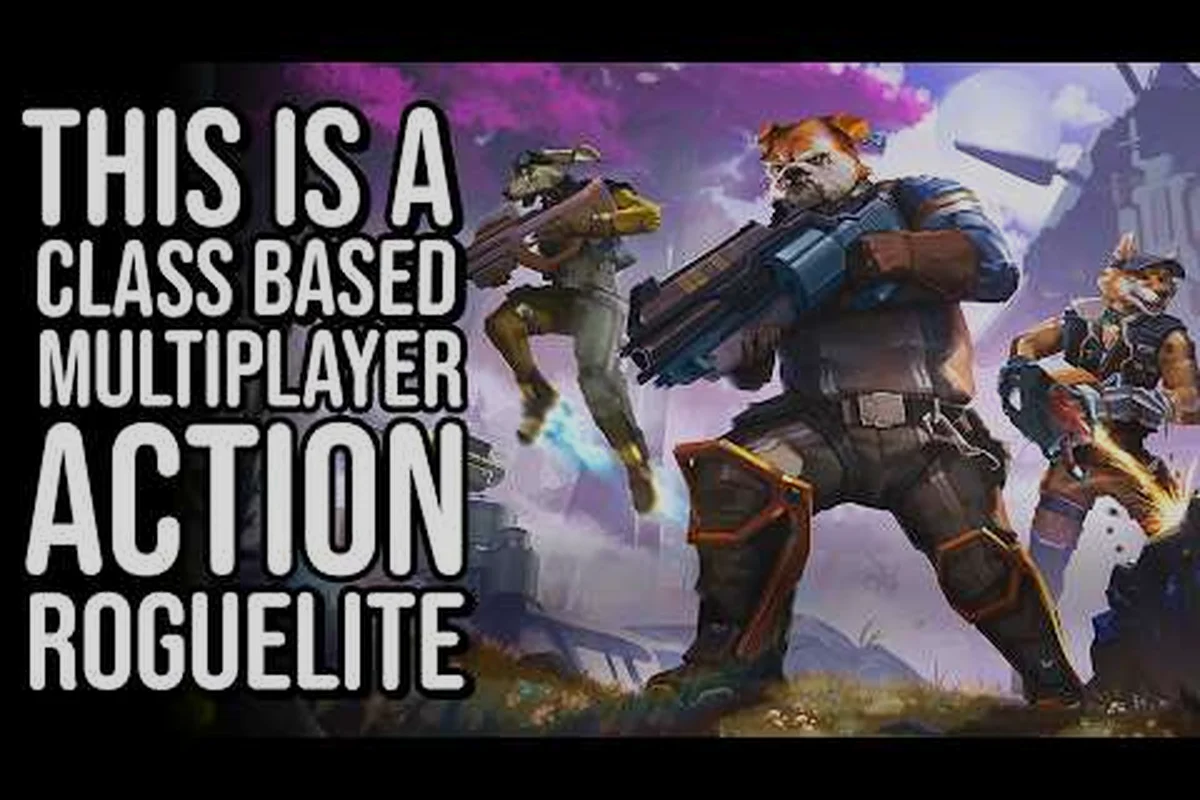
A strong GRAVHOUNDS team turns uncertain encounters into controlled objectives by assigning clear roles before danger arrives: one player monitors threats, one secures resources, and the remaining teammates handle movement, recovery, and extraction. This gravhounds teamwork guide explains how to coordinate roles, communicate enemy positions, protect supplies, and extract cleanly in groups of two, three, or four. For example, a two-player team can separate scouting from salvage, while a three- or four-player squad can designate a rear guard who watches for hostile movement during extraction instead of leaving every player focused on the immediate fight.
How a Coordinated GRAVHOUNDS Team Functions
Effective cooperation begins before the first enemy appears. Decide who leads, who watches the flanks, who gathers materials, and who protects the extraction route. Those assignments prevent the most common failure: several players converging on the same target while another player quietly gathers everything needed to leave.
This four-role rhythm remains flexible across different runs. One player may hold multiple duties in a small group, but every important job still needs an owner. For example, a two-player squad can combine the point player and support roles, provided one teammate calls out forward threats while the other manages materials and rear lanes; in a four-player run, the lead can assign the anchor to protect the extraction route before looting begins, preventing the team from splitting up or leaving the vehicle exposed.
| Team Job | Main Responsibility | Best Moment to Speak |
|---|---|---|
| Team lead | Sets pace, targets, and route | Before entering danger and during major decisions |
| Point player | Detects forward threats and obstacles | Immediately upon spotting danger |
| Support player | Collects supplies, heals, and watches rear lanes | When resources change or flanks are exposed |
| Anchor player | Protects the route, vehicle, or extraction point | During looting, boarding, and retreats |
A team lead does not need to possess the best weapon or make every shot. Their job is to create a shared plan. Point out landmarks, confirm who is covering which direction, and call the next action before the group becomes surrounded.
Start with a 30-second planning routine
Before leaving a safe location, each player can use a compact planning routine that takes about 30 seconds. Keep it brief, but do not skip it during a successful run, because confidence can cause careless spacing. A good squad call should assign the leader, choose the initial formation, and name a rally point in one continuous exchange; for example, the leader can mark the route while the rear player watches for threats. This prevents players from bunching together in narrow corridors or wandering into separate encounters, especially when extraction depends on staying within mutual sight and hearing range.
-
Check the loadout. Confirm that every player has a weapon suited to the immediate danger and enough supplies for the route.
-
Choose the order. Establish a simple formation instead of assuming everyone will naturally occupy the correct position.
-
Name the fallback. Identify a rally point or alternate route before the current path becomes blocked.
-
Define extraction. Decide when the group must stop collecting and return, preferably before panic makes the decision for you.
-
Confirm the roles. Repeat who is leading, covering, gathering, and protecting the exit.
New players can also use the GRAVHOUNDS beginner guide to review the basic systems before building a coordinated squad. Understanding individual movement, equipment, and mission flow makes team calls much easier because each player knows what their tools can accomplish.
GRAVHOUNDS Communication and Coordination Calls
Communication works best when it is short, specific, and tied to visible information. “Enemy!” may create panic, while “Skull left, forty meters” gives teammates a direction and enough time to react. The goal is not constant commentary; it is relevant information delivered before action becomes necessary.
Use three communication layers: location calls, intention calls, and resource calls. A location call gives the team’s shared map an immediate anchor—“Skull ahead-right”—so players do not split their attention across unrelated threats. An intention call states the next action and support requirement, such as “I’m boarding; watch the extraction route.” A resource call reports a capability change, such as “Med secured,” allowing allies to decide whether to push or regroup. This separation matters in GRAVHOUNDS because enemy contact, player movement, and limited resources can change within seconds; combining all three into one long warning can delay the response that matters most.
| Call Type | Example | Team Response |
|---|---|---|
| Location | “Contact ahead-right” | Everyone faces the stated direction |
| Intent | “I’m boarding; cover me” | Support watches the approach and extraction route |
| Resource | “Med secured; back on route” | The group knows whether pressure should increase or decrease |
| Pace | “Hold at the marker” | Players stop and regroup instead of spreading out |
| Correction | “Wrong lane, switch left” | Team updates its shared map without argument |
These calls should use plain, consistent wording. If the group alternates between “left,” “player left,” and “left from my view,” confusion can become worse than silence. Agree on relative directions from the team lead’s perspective, then keep using them consistently.
Coordinate by intent, not by guesswork
A teammate saying “I need help” does not tell the others what action to take. A better call identifies the problem and expected response. “Need help” might mean request healing, request a distraction, or request someone to block an enemy. “Need cover for ten seconds” gives the support player a concrete task.
The same principle applies during looting. One player enters a structure while another remains outside. The indoor player can announce major finds and visible threats, while the exterior player reports approaching enemies. This division keeps both players useful rather than leaving one idle and the other overloaded.
Keep emergency communication simple
Emergency messages should override normal chatter. A useful emergency format has three parts: threat, position, and immediate need. For example, “Heavy enemy behind the truck, blocking extraction, need a distraction.” That sentence gives the team the information required to choose a response.
| Situation | Priority Call | Why It Works |
|---|---|---|
| Player is down | “Player down, location, need support” | Establishes urgency and location |
| Vehicle or path is blocked | “Exit blocked, use left route” | Prevents wasted movement |
| Group is split | “Regroup at red container” | Restores a shared location |
| Resources are ready | “Full load, moving to extract” | Changes the group’s objective |
The best comms reduce how often the team needs to speak. Players who understand the same formations and extraction rules can react to movement, weapon use, and resource changes without a constant stream of instructions. That matters when enemies attack from several directions or a quiet route suddenly becomes unsafe.
Two-Player and Four-Player Team Formations
Two-player squads have the clearest job division, but they also have less room for mistakes: if either teammate becomes separated or eliminated, the survivor may lose access to loot, cover, or the extraction vehicle. Keep both GRAVHOUNDS within support distance so the forward player can react to threats, but avoid stacking them in the same doorway or aiming point, which can reduce visibility and create friendly-fire risk. For example, during looting, one player can enter first while the other covers the route, then reverse those positions if the room’s layout changes.
In a duo, one player can act as scout and forward support, while the other handles sustained defense and extraction. The roles can switch when the player with better mobility needs to collect something, provided the handoff is explicit. A simple table makes the pair easier to adjust:
| Two-Player Situation | Forward Player | Supporting Player |
|---|---|---|
| Normal travel | Watch ahead and mark obstacles | Stay within support distance |
| Looting | Enter and collect selected supplies | Cover the doorway and route |
| Enemy contact | Draw attention or exploit an opening | Control the dangerous angle |
| Extraction | Reach the first checkpoint | Clear the rear and protect the vehicle |
For a fuller look at combinations, compare character-specific strengths through the Selene and other GRAVHOUNDS guide. The important part is not choosing a famous character but selecting tools that complement one another instead of duplicating the same role.
Build the four-player team around lanes
A four-person squad works best with two active fronts and two support functions. One player can control the nearest danger, a second can cover a wider flank, a third can gather or support, and the fourth protects the extraction route or objective. They should remain close enough to respond but not so close that every enemy forces the group to turn together.
The strongest four-player spacing pattern uses staggered positions, with the front point, flank anchor, support, and rear guard each holding a different line of responsibility. For example, when the front point draws fire, the flank anchor can watch the exposed side instead of stacking shots on the same target, while the support player gathers resources or healing and the rear guard protects the extraction route. This staggered formation reduces crossfire and overlapping enemy aggro, prevents all four players from aiming at the same target, and gives every teammate a visible task without forcing the squad to turn as one.
| Squad Position | Job | Common Mistake |
|---|---|---|
| Front point | Breaks initial contact | Advancing without checking the sides |
| Flank anchor | Covers the exposed side | Wandering too far from the group |
| Support | Handles supplies and healing | Hoarding resources without announcing them |
| Rear guard | Protects the return path | Rushing ahead when the group is still gathering |
Adjust this pattern when a corridor blocks movement. Rotate the front point to the rear guard if the team needs to reverse direction, and move the rear guard to the opposite flank. Communication should describe the rotation because visual position alone becomes ambiguous during combat.
Players comparing larger compositions can use the post-patch GRAVHOUNDS tier list as a starting point for role coverage. Character strength matters less when four players all crowd the same angle, so evaluate the complete party rather than four individual ratings.
Resource Handoffs and Base Defense
Resources are a team asset, not personal loot. A strong group assigns ownership, announces changes, and prevents accidental pickups. In the GRAVHOUNDS base-building tips, the emphasis on defenses is complemented by shared operating rules: if everyone knows who can collect, repair, or move an item, the group avoids wasteful duplication.
A clear handoff includes what changed, where it is, and who needs it. “I have the med item” is not enough when teammates need to know whether it should be carried forward, left for the extraction player, or used immediately.
| Resource Situation | Clean Handoff |
|---|---|
| Healing item acquired | “Healing secured; keep moving” |
| Valuable cargo found | “Heavy cargo with me; need extraction cover” |
| Vehicle fuel collected | “Fuel ready; route back open” |
| Base repair item found | “Repair item secured; returning to base” |
| One player is overloaded | “Cargo transfer point; two carriers needed” |
Separate collecting from carrying
During a sweep, one player can identify and collect lightweight resources while another guards the approach. When the valuable item is found, ownership should transfer explicitly. This prevents the scenario where three teammates assume someone else is carrying the critical cargo and the group leaves without it.
Do not let every player pick up everything automatically. Excess weight can slow movement, reduce combat readiness, and create a false sense of progress. Assign a load limit for each stage of the run. A simple rule is one person carries the objective while the others carry support supplies, with one designated backup carrier.
Defend a base as a layered objective
Base defense should divide into detection, damage control, and repair. One player watches for approaching enemies, another protects the critical structure or objective, and the others handle healing, ammunition, and repairs. If the team has no spare person for repair, assign the rear guard to respond when the base is secure.
| Base Defense Layer | Team Assignment | Benefit |
|---|---|---|
| Detection | Player near the approach lane | Reveals threats before they reach the structure |
| Damage control | Player beside the objective | Interrupts enemies before a breach |
| Repair | Mobile support player | Restores damage without abandoning every front |
| Rotation | Rear guard | Reacts if attackers switch sides |
Do not scatter defenders so far apart that none can support another. In a two-player setup, one player should hold the critical structure while the other watches the approach lane and rotates in when threats redirect; in a four-player squad, keep damage control close, but position the mobile support player within immediate reinforcement range. This layered spacing preserves ammo, repair, and revival opportunities. If enemies split between two lanes, the rear guard can rotate and let the objective-side player plug the breach, because a tight defense can be more effective than a large perimeter when the goal is to survive the current wave rather than defeat every distant enemy.
Combat Scenarios That Require Fast Coordination
Coordination becomes visible under pressure. The team does not need a perfect plan for every encounter, but it needs predictable responses to common situations. Pre-assign the likely solution for an approaching enemy, a crowded room, a broken route, and an early extraction.
Focus fire without wasting the whole team
One player should identify the target that requires immediate attention, then assign the other three roles clearly: focus fire, flank, or reposition for ammo/recovery. For example, if a priority skull appears near the team’s rear, one player can mark it while the others create covering fire instead of attacking separate enemies. Too many simultaneous attacks can leave the rear exposed, while too much hesitation lets stronger enemies recover, so the team should commit only after the target, position, and role call are understood.
The team lead can use a three-part target call: priority, position, and intended focus. “Priority skull, far right, all focus” tells everyone to aim at the same dangerous enemy. “Priority skull, far right, I focus; others flank” creates a deliberate split instead.
| Combat Situation | Lead Decision | Supporting Behavior |
|---|---|---|
| One dangerous enemy | Team focuses together | Concentrate fire and avoid wandering |
| Several weak enemies | Split into two pairs | Each pair handles one target |
| Unknown enemy type | Hold position briefly | Gather information before committing |
| Ammo pressure | One player engages, one recovers | Preserve options instead of rushing |
| Player separated | Keep original objective covered | Reunite before attempting a flank |
Retreat as an intentional objective
A retreat is not a failure if the team extracts with its cargo and surviving players. Call the retreat early enough that players can leave together. The person closest to the route should guide movement, while the rear guard monitors pursuers.
If a teammate is down, decide quickly whether recovery is possible without exposing the entire team. When the answer is no, mark the location, secure the resources, and preserve the surviving squad. These decisions should follow a previously discussed rule instead of becoming a heated discussion in the middle of danger.
Handle crowded interiors carefully
Doorways and small rooms create friendly-blocking problems. Send one player first, one to cover the entrance, and the remaining teammates to flank if space allows. Each player should state whether they are entering, holding, or circling. This prevents all four from stacking behind the same doorway while enemies attack from the side.
Preparation should include carry priority and door responsibility. The carrier stays behind the first scanner, the rear guard owns the entrance, and the team lead calls when everyone should cross. Simple spatial rules become especially valuable when the room contains multiple exits.
A Repeatable GRAVHOUNDS Co-op Run Plan
A successful co-op run should follow a repeatable cycle of prepare, enter, gather, adapt, extract, and review, with clear ownership attached to each phase. For example, the lead can nominate one player to track route calls while another watches the flanks; if enemy behavior forces the team off the planned route, collectors can regroup without abandoning mission-critical cargo. This flexibility matters because changing threats should trigger an announced role swap, not a silent shift that leaves teammates unsure whether to defend, collect, or move toward extraction.
| Run Phase | Lead Focus | Team Focus | Success Condition |
|---|---|---|---|
| Prepare | Confirm loadout and route | Check healing, ammo, and tools | Everyone knows the first objective |
| Enter | Control spacing | Maintain cover and watch flanks | Team remains connected |
| Gather | Assign collectors | Share resource status | Critical cargo is identified |
| Adapt | Reassign threatened jobs | Preserve mission priority | Roles change without confusion |
| Extract | Set the cutoff | Clear the route and protect carriers | All surviving players reach safety |
| Review | Record the failure point | Adjust roles and supplies | Next run starts stronger |
This cycle turns the gravhounds how to coordinate question into repeatable behavior rather than improvised panic. In the Prepare phase, the lead can confirm healing, ammunition, tools, and the first objective so no collector starts with missing resources; during Enter, spacing and flank coverage prevent the team from separating on the route. At Gather, announced collector assignments and shared resource status identify mission-critical cargo. If enemy behavior interrupts the route, the Adapt phase calls an explicit role swap, while Extract sets a clear cutoff to protect carriers and get all surviving players to safety.
Prepare the squad before deployment
At the preparation stage, verify the mission objective, anticipated travel time, and available tools. If the group can handle the encounter through one player while others gather resources, assign that arrangement before entering. If the group needs concentrated force, everyone should know that the gathering phase has ended.
Communication equipment only matters if the team uses it consistently. Choose a small set of call types, rehearse them once, and avoid changing their meaning mid-run. For a new squad, these gravhounds communication tips can be posted beside the lobby and removed after the team develops a natural rhythm.
Set extraction rules before collecting
Extraction is where many otherwise successful Gravhounds runs collapse because the team loses coordination under cargo pressure: one player assumes another has already moved an item, a courier doubles back for a low-value pickup, or the group debates a route after the safe window closes. For example, if the carrier is carrying multiple items and another teammate chases a low-value crate, the carrier can be caught while separated from support. Treating each pickup as a shared objective—and moving the group together before changing targets—reduces wasted travel and prevents avoidable deaths.
Set a simple rule: collect valuable items first, announce each objective, return when the carrier reaches a capacity threshold, and do not split the group for a minor pickup without explicit approval. If an emergency forces a route change, the lead identifies the new destination and the rear guard confirms that everyone has crossed the turn.
Isolate One Weak Spot Per Run
Reviewing every detail can create friction, so focus on one meaningful failure point. Did the group enter without assigning a rear guard? Did communication lag during a doorway fight? Did players leave with too many optional items and no space for cargo?
Community experience commonly shows that coordination problems become easier to fix when players describe an observable event rather than assigning blame. “No one covered the left side at the red container” is actionable, while “the scout was bad” encourages argument. Use this evidence-based approach to improve the next formation and resource plan.
The best GRAVHOUNDS team is not necessarily the team with the loudest players or the largest number of shots fired. It is the team that knows what each member is doing, shares resources before they become a problem, and leaves dangerous areas with the same discipline it brought to them.
Frequently Asked Questions
What is the best way to coordinate in GRAVHOUNDS?
Assign four clear functions: lead, point, support, and rear guard. Give every player one immediate job, use short location and intent calls, and confirm the extraction objective before entering a dangerous area. The system works for two-player and four-player teams because it scales assignments without requiring every member to perform every task.
How should a two-player team split resources?
Use one player as the forward collector and the other as the close-range defender and route protector. Keep them within support distance, announce major finds immediately, and transfer the objective to one designated carrier before leaving the area. This prevents both players from collecting the same item while neither protects the route.
Which calls are most useful during a fight?
Useful calls identify the threat’s position, the caller’s intention, and the response needed. For example, “Skull ahead-right; I distract, cover me” provides more actionable information than “Enemy.” Prioritize calls about heavy threats, downed players, blocked exits, and changes to the extraction plan.
Should a four-player team stay together?
Yes, remain within mutually supporting distance, but use staggered positions rather than forming a single cluster. Assign two players to the front and flanks, one to resources, and one to protect the rear. Rotate positions when the route reverses so the team does not enter every room with the same blind side.
How can a team improve a failed run?
Review one specific failure rather than assigning general blame. Identify whether the problem was an undefined role, late resource warning, poor spacing, or an extraction disagreement. Adjust that rule for the next run, such as assigning a rear guard or setting a cargo-capacity cutoff before the mission begins.