
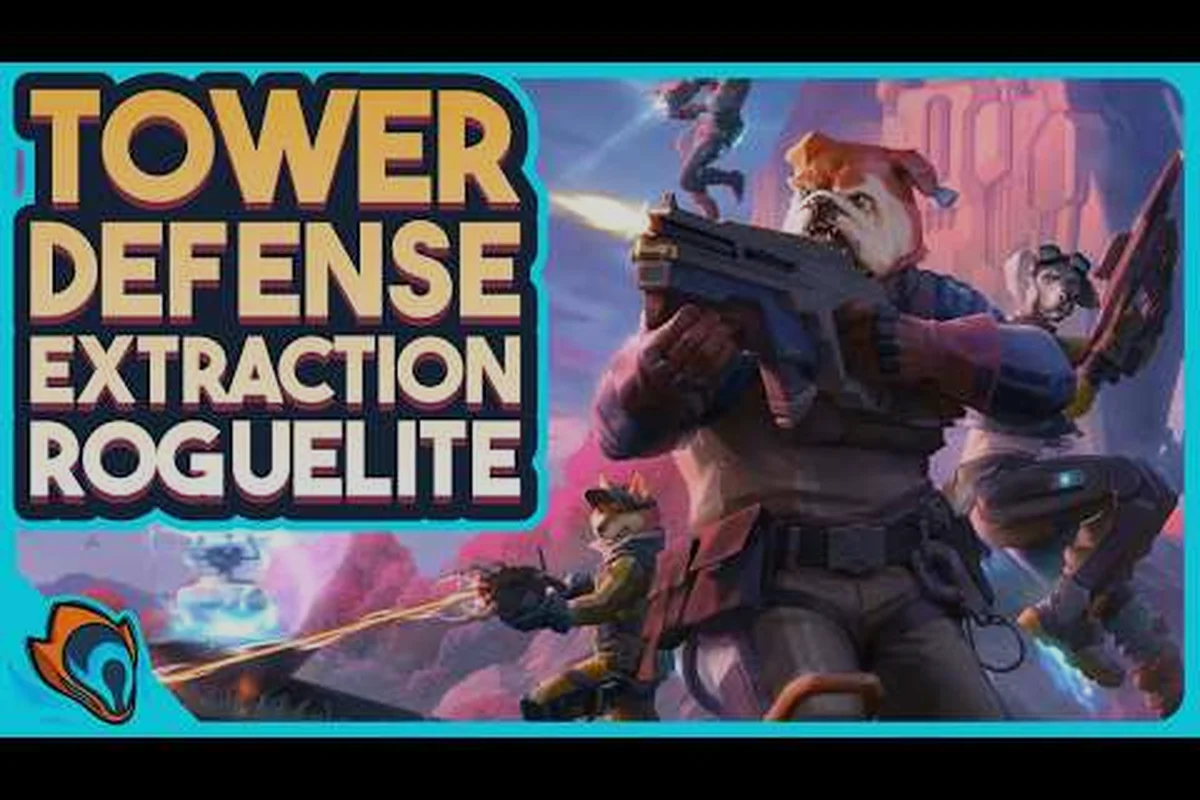
Understanding the GRAVHOUNDS game explained survival loop is important because every successful expedition depends on balancing preparation, exploration, and extraction. This guide traces the full journey from accepting a job to securing resources, defending the base, and surviving increasingly dangerous contracts.
GRAVHOUNDS Game Explained: The Full Survival Loop
GRAVHOUNDS is a survival extraction game built around a repeatable risk-and-reward loop. Players prepare at a home base, accept a job, travel to a hostile planet, gather valuable resources, and return before the expedition becomes too dangerous. The central decision is not simply whether a mission is worth attempting, but whether the expected rewards justify the supplies, time, and exposure required to complete it.
The official GRAVHOUNDS gameplay overview on Xbox shows the game's survival structure in motion: exploration, resource collection, threat management, and extraction are connected parts of one expedition. Understanding how those parts affect one another makes the difference between a disciplined run and a costly loss.
| Stage | Main objective | Primary risk | Success condition |
|---|---|---|---|
| Base preparation | Equip tools and choose a job | Overspending or carrying too little | Ready to handle the contract |
| Expedition | Explore the destination | Wasting time or triggering threats | Locate needed resources |
| Collection | Gather useful materials | Inventory pressure and ambushes | Decide whether to continue |
| Return | Extract with the cargo | Losing resources during withdrawal | Bring valuables home safely |
| Upgrades | Improve the base and equipment | Overextending the economy | Better readiness for the next run |
This loop remains consistent across the campaign, although the balance changes over time. Early expeditions prioritize learning the route and protecting basic equipment. Midgame contracts reward better planning, more efficient gathering, and smarter retreat decisions. Endgame runs depend on preparation, timing, and the ability to abandon a valuable objective when continuing becomes a mistake.
The Preparation Decision
Before departure, every item serves a purpose in the survival loop. Some supplies improve gathering, some help repair damaged equipment, and others create room for more valuable cargo. A player who enters a contract carrying too many consumables may survive combat but fail to extract enough value, while a player who carries too little may need to abandon the mission after a single complication.
Preparation should therefore begin with the contract itself. Consider the destination, likely travel time, expected hazards, and the value of the intended cargo. A reliable run does not require maximizing every category; it requires covering the most plausible failure points without turning the player into a slow, vulnerable convoy.
The practical baseline is straightforward: treat the cargo manifest as a risk budget rather than a checklist. For example, if a contract promises a valuable relic but routes the hound through hazardous terrain, prioritize one repair item, a modest supply buffer, and enough extraction capacity for the relic; adding several low-value consumables can reduce mobility and increase recovery time without improving the run’s expected return. The right balance therefore changes with each destination, travel window, and hazard profile.
-
Carry enough supplies to absorb an ordinary mistake.
-
Bring repair or protection for essential equipment.
-
Leave inventory room for the materials worth bringing home.
-
Avoid loading the expedition with low-value items that become dead weight.
-
Set a clear condition for retreating before conditions deteriorate.
This foundation becomes clearer when preparation is treated as a sequence of decisions rather than a shopping list. For example, reserve the first extraction slot for the contract’s named relic, then add repair or protection only if the destination’s expected damage can disable the hound or its cargo container. New players can use the demo preparation and extraction guide to test this relationship in the demo, comparing a lightly equipped hound against one carrying several consumables. If the heavier load slows movement or increases recovery time, the extra supplies may cost more value than they protect. That comparison also reveals when to leave, because extraction capacity and remaining cargo determine whether a successful hunt still becomes a profitable run.
Early Game Guide: Building a Safe Foundation
A practical gravhounds early game guide begins with deliberate runs rather than difficult objectives. The early phase is where players learn how time affects risk, how equipment changes a fight, and how much value can be accumulated before the safest option becomes extraction. Progress should come from understanding those relationships, not simply accepting the most expensive job available.
Keep the First Contract Simple
The first expedition should prioritize familiar terrain, a visible route, and enough time to return comfortably. Its purpose is to establish a baseline. Players should note how quickly the environment changes, which tools are repeatedly useful, and how long typical travel and gathering take. Without those observations, later missions feel unpredictable even when the controls and rules have not changed.
Early contracts are also the best place to test a return threshold. If a player needs ten minutes of gathering before the mission becomes dangerous, leaving at nine minutes may sacrifice value but protect the run. Consistent early discipline becomes a strong habit when the stakes and map complexity increase.
| Early-run choice | Safe approach | Riskier alternative | Why the distinction matters |
|---|---|---|---|
| Inventory | Essential tools plus modest cargo space | Nearly every available item | Early value comes from repeatability |
| Contract | Short and easy to read | Distant target with high rewards | Travel time may erase the bonus |
| Combat | Avoid when possible | Test a limited encounter | Learning damage costs equipment |
| Extraction | Leave while the route remains clear | Stay for one extra cache | Late detours create avoidable losses |
Learn the Value of Every Slot
Inventory is more than a collection window. Each slot represents a choice between present protection and future profit. Players should learn which items can be discarded immediately, which are useful for repairs, and which have value only after processing. This prevents the common early mistake of returning with many objects but too little room to protect the most valuable ones.
Low-capacity expeditions make equipment decisions easier to evaluate. Bring one dependable tool, one recovery option, and a small amount of protective gear. As soon as the cargo starts competing with those essentials, the contract's value has already begun to decline.
The community's approach to build strength can add further context through the GRAVHOUNDS community tier list guide, but it should support rather than replace the foundation of this guide. Strong equipment is valuable because it preserves margins; a weak item is acceptable only when the mission remains forgiving and the player can avoid failure entirely.
Build a Rejection Habit
The most important early skill is recognizing a bad contract. Reject a job when its required travel time is too long, its destination conflicts with current equipment, or its promised rewards demand more inventory than the player can protect. Rejecting one poor contract is more efficient than completing it with damaged tools or abandoned cargo.
This habit produces a stable economy. Successful runs fund the next preparation, while unsuccessful ones teach players which risk was not worth taking. The early game is therefore not about collecting the largest number of resources in a single session; it is about building a repeatable process that survives mistakes.
Mid Game Guide: Managing Risk, Time, and Cargo
The gravhounds mid game guide centers on optimization. Players now understand the basic loop and should be able to recognize value, compare routes, and preserve the equipment needed for extraction. The challenge shifts from learning the rules to coordinating several constraints at once: limited time, finite capacity, escalating threats, and increasingly attractive cargo.
Set a Profit Threshold Before Departure
Before accepting a contract, calculate what success needs to look like. A useful threshold includes the minimum materials required, the expected extra value worth collecting, and the point at which the player should stop gathering. This prevents exploration from turning into an open-ended commitment, because every additional cache may seem valuable while the extraction window steadily narrows.
The threshold should be tied to actual progress, not a vague intention to leave quickly. For example, a player might decide to gather one required material, collect two secondary resources if the route stays clear, and return without pursuing a distant cache. The rule works because it accounts for the mission's known objective while allowing controlled upside.
| Midgame factor | Conservative approach | Aggressive approach | Best use |
|---|---|---|---|
| Contract target | Complete the core objective | Collect optional resources early | Confident runs with strong equipment |
| Route | Stick to known landmarks | Cut toward unexplored areas | Limited scouting rather than full collection |
| Cargo | Extract on schedule | Continue until capacity is high | High-value loads only when extraction is clear |
| Combat risk | Retreat after a costly encounter | Use every advantage to clear threats | Situations where stopping would be worse |
Separate Exploration From Exploitation
Exploration reveals value, while exploitation collects it. Mixing the two can push a team into unfamiliar terrain while carrying cargo, which increases travel time and reduces reaction time when trouble appears. A cleaner approach uses one reconnaissance trip to identify safe resources and another trip to collect them efficiently.
This pattern is especially useful in co-op play because one player can watch for threats while another gathers. The multiplayer and co-op guide explains how roles and communication can make these divisions practical. The core benefit remains relevant in solo play as well: separating information gathering from cargo collection reduces wasted movement.
Protect the Run's Center of Gravity
Every expedition has a Run Anchor: the tool, objective, or supply that makes continuing worthwhile. Losing that item may end the contract, while losing optional cargo merely reduces profit. Protecting the anchor should take priority over chasing another cache. For example, if a gravhound is carrying the only active extraction beacon, surrendering that beacon can fail the gravhounds endgame payout even when a valuable cache remains nearby; by contrast, abandoning low-weight salvage usually costs only the run’s margin. Treat the anchor as the decision point for whether the haul is still viable, not merely as another item in the inventory.
Players can improve efficiency by establishing simple decision rules: set a maximum cargo-weight target, calculate whether the active extraction beacon can survive the return journey, and identify the exact supply that prevents failure. For example, if a gravhound carries the beacon plus 80% of its capacity, abandon low-weight salvage before risking a route change; preserving the Run Anchor keeps the payout viable, while overfilling the load can force a slower escape and expose the beacon to greater danger.
-
Stop gathering when the anchor is threatened or depleted.
-
Leave early if the return route becomes harder to read.
-
Separate high-value cargo from emergency supplies.
-
Repair only what remains useful for the next contract.
-
Accept a smaller successful payout before attempting a perfect one.
These rules are the foundation of the gravhounds endgame guide because the final phase magnifies every weak decision. A strong load is useless if it cannot be carried home, and a large supply of ammunition is wasted if the ammunition itself becomes the reason the run fails.
Endgame Guide: High-Stakes Contracts and Extractions
A useful gravhounds endgame guide is less about memorizing a single route and more about protecting the ability to make decisions. Endgame contracts offer stronger rewards, but they also expose the cost of poor preparation, slow travel, and unclear retreat conditions. Players need repeatable habits that remain effective when the mission becomes unstable.
Prepare for the Return Before Taking the Last Cargo
Extraction begins when the player turns toward home, not after the final item is collected. By the time a load is complete, travel time, equipment wear, and hostile activity may already have changed. Players should preserve enough capacity and supplies to support the return journey instead of treating extraction as a guaranteed final step.
Extraction readiness should be checked before the final valuable pickup. Confirm that the return path is known, essential equipment remains functional, and the cargo can be moved without excessive delays. If one of those conditions fails, the rational move is to bank the current result rather than pursue maximum profit.
Know Which Losses End the Run
Different failures have different consequences. A minor hit may consume supplies. A broken core tool may prevent mission completion. A lost extraction route can strand the player far from home. Understanding this hierarchy helps players decide whether to fight, repair, hide, or withdraw.
| Failure state | Best response | Why delay can be costly |
|---|---|---|
| Minor damage to a nonessential item | Continue if mobility remains intact | Repairing too early wastes resources |
| Damaged core tool | Retreat or switch to the extraction plan | Further use may cause complete failure |
| Several hostile contacts nearby | Break line of sight and relocate | Every additional encounter adds time and cost |
| Uncertain route home | Stop collecting and establish bearings | Lost time compounds danger |
| Nearly full valuable inventory | Extract immediately | Marginal cargo may cost the entire run |
Use Time as a Scarce Resource
Late-game players often focus on enemy strength, but time can be the more consistent constraint. Faster travel, quicker gathering decisions, and earlier extraction may matter more than a minor increase in combat power. Every minute spent exploring provides more opportunities for an unfavorable event, and a failure near the destination can erase gains gathered across the whole contract.
The best endgame decisions are therefore conservative in execution and ambitious in preparation. Players can improve their odds with better equipment, a well-tested route, and a full knowledge of the extraction conditions. Once under pressure, simple rules work best: protect the anchor, preserve the route, and leave before the remaining margin disappears.
Late Game Tips: Turning Experience Into Better Decisions
The strongest gravhounds late game tips are not about one perfect loadout or a secret route. They come from reducing avoidable mistakes through preparation, information, and clear limits. A veteran player may survive dangerous encounters, but the most effective players know when an encounter, material, or detour is not worth their resources.
Use Three Preparation Layers
A strong late-game setup works in three layers. The first covers basic recovery, the second protects the core mission, and the third enables optional value. This structure prevents a player from spending everything on one category while leaving another vulnerable.
| Preparation layer | Purpose | Example decision |
|---|---|---|
| Survival layer | Absorb an ordinary mishap | Carry recovery supplies for essential equipment |
| Mission layer | Finish the contract | Protect the primary tool and required materials |
| Opportunity layer | Collect extra value | Add cargo room only when extraction remains comfortable |
Before an advanced run, check each layer independently. If the mission layer is weak, better rewards do not compensate for the inability to complete the objective. If the survival layer is missing, one unfavorable event may force an early return. Opportunity gear should only be added after those foundations are secure.
Review Runs Instead of Judging Outcomes
A failed contract can still reveal where a GRAVHOUNDS run actually broke down. Track the return window, route time, loot carried out, and the exact trigger for extracting early—for example, whether a damaged item made the extraction route less reliable or whether an optional cache consumed the margin needed to reach a safe exit. Comparing those points across runs turns “bad loot” or “good loot” into actionable decisions, because the valuable outcome is often the loot that remained affordable after travel, damage, and exposure costs.
Useful review questions include: how many seconds remained in the return window when extraction began, and how much carrying capacity was still available after loot was secured? Comparing a clean extraction with a failed extraction can reveal whether the deciding factor was route time, optional loot volume, or damage taken. For example, if two runs collected the same contract loot but one extracted with 20 seconds remaining and the other with 5, the second run’s route planning or cache decision was the real problem. Recording these figures across review runs makes performance measurable instead of relying on a vague sense that a run felt difficult.
-
Did preparation match the actual demands of the contract?
-
Was the route longer than expected?
-
Did the player continue after the return window narrowed?
-
Was one optional cache worth the added exposure?
-
Did a damaged item force a retreat that better planning could have prevented?
The progression and survival improvement guide can help turn those observations into a repeatable improvement plan. The key is to adjust one or two variables at a time, because changing the route, loadout, extraction threshold, and target together makes it difficult to determine which change worked.
Make the Run Finishable
A finished extraction beats a perfect run that ends in loss. As danger increases, complete the core contract, collect only reasonable bonuses, and return while the route remains dependable. This rule does not make every run passive; it makes risk intentional. A player who accepts a close call has chosen that danger for a reason, rather than arriving at it through slow decisions.
Late-game mastery is the ability to separate worthwhile ambition from avoidable exposure, especially when a Gravhounds contract combines a core payout, optional cargo, and escalating extraction pressure. Better equipment improves survival odds, but route knowledge, realistic cargo targets, and a firm retreat rule remain dependable: if the planned path starts forcing repeated scrambles, repeated damage, or improvised detours, the bonus cargo is no longer worth its opportunity cost.
Practical Checklist for Every Expedition
A compact checklist helps translate the survival loop into action. Review it before accepting the contract, after the first valuable pickup, and again when deciding whether to continue. The checklist does not replace map knowledge, but it reduces the chance that one rushed decision overwhelms an otherwise sound run.
Pre-Departure Equipment and Capacity Checks
-
Confirm that the contract rewards justify the required travel time.
-
Match the equipment loadout to likely mission demands.
-
Keep essential recovery supplies separate from optional cargo.
-
Leave enough inventory capacity to protect the intended return load.
-
Define the extraction threshold before the first pickup.
During Exploration
-
Record landmarks and route conditions as they are discovered.
-
Avoid turning a productive route into an uncontrolled detour.
-
Keep the mission item protected from unnecessary use.
-
Compare the current cargo with the value required to complete the contract.
-
Leave when the return route becomes less reliable.
During Extraction
-
Retrieve the full mission objective before prioritizing optional materials.
-
Slow down if pressure from hostile activity increases.
-
Abandon fragile cargo if preserving it threatens the whole run.
-
Track inventory space during collection rather than after loading.
-
Bank the result rather than gamble the entire expedition on one extra cache.
This routine is useful for solo and cooperative expeditions because it turns personal judgment into observable behavior. If a teammate handles route scouting or defensive positioning, the four-player party setup and troubleshooting guide can help the group assign those responsibilities without confusing coordination with individual caution.
Frequently Asked Questions
What is the main survival loop in GRAVHOUNDS?
The main loop begins at the base, where players prepare equipment and accept a contract. They then explore a hostile destination, gather required and optional resources, survive threats, and extract with useful cargo. Returning rewards fund better equipment and further expeditions, while losses make the next preparation more important.
Should new players accept every available job?
No. New players should favor shorter contracts with clear routes, forgiving conditions, and rewards that fit their current equipment. The best early job is one that teaches a mechanic without demanding every survival skill at once. As experience grows, rejecting poorly matched contracts becomes just as important as accepting profitable ones.
When should players extract during a run?
Extraction should begin as soon as the contract objective is secured and the return route remains dependable. Delay may add value, but it also increases travel time, exposure, and the chance of losing what has already been collected. Players should set a threshold before departure and treat reaching it as a decision point rather than a suggestion.
What changes between early and late contracts?
Early contracts mainly teach preparation, travel, gathering, and extraction. Later contracts add more valuable cargo and tougher consequences for slow decisions. Equipment improves, but route knowledge, inventory discipline, and a clear retreat plan remain decisive because dangerous encounters can invalidate excellent preparation before the reward is secured.
Can a failed GRAVHOUNDS run still help with progression?
Yes, when it reveals a preventable mistake. Failed runs can identify weak equipment, overly ambitious cargo targets, inefficient routes, or a retreat threshold that was set too late. Reviewing those causes and changing one variable in the next run produces more consistent progress than repeating the same contract without a clearer plan.