
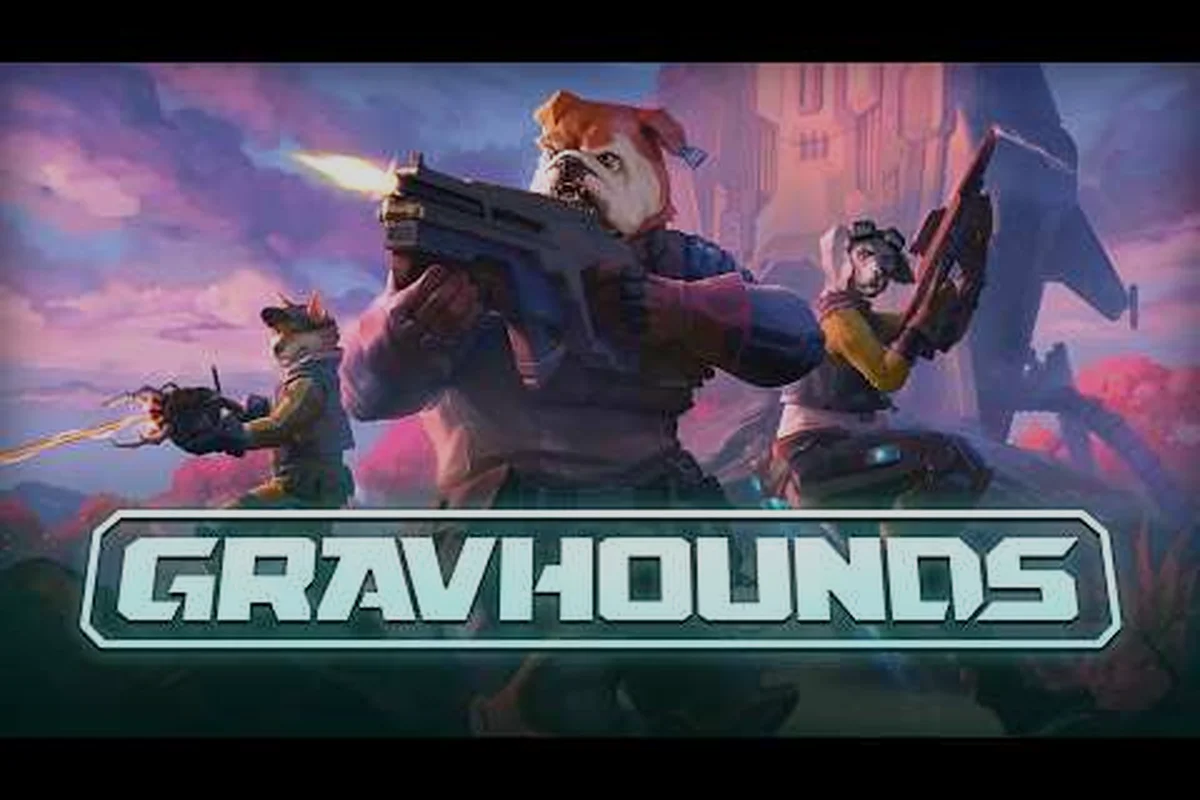
GRAVHOUNDS planned content matters because it sets the pace for combat balance, new challenges, and the long-term roadmap. The current Early Access plan reportedly spans six months, giving players a concrete window to shape the game before version 1.0.
GRAVHOUNDS Planned Content Overview
The GRAVHOUNDS Early Access plan provides a useful framework for judging which changes are permanent additions, which are tuning passes, and which may still be replaced after player testing. That distinction matters because Early Access roadmaps can shift when developers respond to balance data, technical issues, or feedback from different playstyles.
According to the published roadmap, the first major phase focuses on character progression, mission variety, and encounter refinement. Later stages are expected to expand endgame objectives and presentation while preparing the game for a more complete 1.0 state. These broad categories offer direction without promising every specific item on a fixed calendar.
| Roadmap element | Early Access purpose | Expected player impact |
|---|---|---|
| Character progression | Strengthen early unlock choices | More viable builds and replay value |
| Mission variety | Expand repeatable objectives | Less repetitive core sessions |
| Encounter refinement | Tune enemy behavior and challenge | More consistent difficulty |
| Endgame expansion | Add longer-term goals | Greater reason to keep progressing |
| Version 1.0 preparation | Stabilize features and presentation | A more polished final framework |
The Six-Month Development Window is the central reference point for the plan. It should not be interpreted as a guarantee that every feature shown today will remain untouched, but it does provide a shared target for pacing major updates. For background on the launch structure, see the GRAVHOUNDS Early Access overview.
What Players Can Learn Now
Players can use the roadmap to separate dependable information from speculation. Confirmed themes, such as the planned duration and broad content goals, are useful for planning. Individual balance values, pricing decisions, and exact release dates are more likely to change as development continues.
The most dependable approach is to check for patch notes and developer updates whenever the current build changes. A feature shown in a roadmap can still move because of server performance, economy balance, accessibility work, or the difficulty of implementing a larger feature without creating technical debt.
Early Access Timeline and Major Development Phases
The available roadmap describes a Six-Month Early Access duration, though individual updates may arrive at different times inside that window. Players asking about the total length of the release period should therefore distinguish between the planned development window and the schedule for any single feature.
A practical interpretation divides the period into three broad phases. Early development establishes the playable foundation, the middle phase expands and reworks systems based on feedback, and the final phase concentrates on long-term goals, polish, and preparation for version 1.0. These are planning phases rather than confirmed update labels, so players should not treat them as release promises.
| Phase | Development focus | Likely signs of progress |
|---|---|---|
| Foundation | Core progression and encounter tuning | Character balance changes and clearer objectives |
| Expansion | Additional missions and endgame structure | More varied rewards and repeatable challenges |
| Polish | Performance, presentation, and 1.0 readiness | Bug fixes, visual refinement, and final tuning |
Early Phase: Establishing the Foundation
The first phase concentrates on making existing systems coherent. Character abilities, enemy encounters, mission pacing, and reward distribution need to work together before large content additions become meaningful. Otherwise, new missions can inherit unclear goals or unbalanced difficulty from the systems beneath them.
Players can evaluate this phase by asking whether progression feels understandable, whether different characters have distinct roles, and whether objectives remain challenging without creating repetitive failure states. Those questions are more useful than counting individual patches because every update can alter the wider balance environment.
Middle Phase: Expanding the Experience
The middle of the roadmap is where breadth becomes a major focus. Expanded mission variety can provide more reasons to return, while additional endgame objectives can increase the value of progression. This stage may also introduce broader feature sets, but exact additions should be evaluated against the official roadmap rather than community wishlists.
The launch-date and roadmap reference provides useful background on how the Early Access period connects to the broader release schedule. Players should treat dated targets as provisional when the developer has not formally announced a specific release window.
Final Phase: Preparing for Version 1.0
The closing phase should focus on stabilization. That includes correcting lingering bugs, reducing friction, refining balance, and ensuring that the content available during Early Access forms a coherent foundation for the full release. A polished 1.0 build may include fewer features than an unfiltered wishlist, but it should deliver a stable and understandable experience.
Planned Content Features and Progression Goals
The clearest value of GRAVHOUNDS planned content is its emphasis on playable depth rather than a simple list of extras. Progression, missions, and encounters are linked: better character options create more approaches, varied objectives test those approaches, and refined encounters reward the right balance of preparation and adaptation.
Character Progression and Build Freedom
Character development is a central roadmap theme because it affects the first hour of play as strongly as the final mission. New players benefit from clearer information about strengths, weaknesses, and unlock conditions, while experienced players want enough build variety to keep testing different approaches.
Useful progression checks include comparing the planned early access roadmap with the current character framework: confirm whether unlock windows, skill trees, and equipment tiers give players enough time to adapt to a new GRAVHOUNDS build without making the next few weeks predictable. A practical test is to follow one character from the opening missions through its first upgrade choice, then assess whether each unlock changes viable tactics rather than merely adding stronger numbers.
-
Whether early unlock paths offer meaningful choices.
-
Whether role-specific characters remain competitive without requiring perfect execution.
-
Whether upgrades improve decision-making rather than simply increasing raw numbers.
-
Whether progression rewards support experimentation across several playstyles.
These checks help players judge the Character Progression Loop without relying on a single tier ranking, which can shift after balance patches. For a snapshot of current community rankings, the current GRAVHOUNDS tier list can be treated as a temporary reference rather than a permanent forecast.
Mission Variety and Replayability
Mission variety is valuable only when objectives produce meaningful decisions. Different labels do not create replayability if every mission asks for the same sequence of actions or offers rewards with no strategic purpose. The roadmap should therefore be judged by the range of goals, encounter patterns, and preparation requirements.
| Content area | Weak implementation | Stronger implementation |
|---|---|---|
| Missions | Repeating one combat pattern | Different objectives and pacing |
| Endgame goals | One repeated reward track | Several progression paths |
| Encounters | Mostly stat checks | Rewards for positioning and targeting |
| Rewards | Broadly interchangeable upgrades | Choices tied to build identity |
This framework helps explain why Mission Variety Expansion appears near the top of the roadmap for many prospective buyers. The game needs enough variety to remain engaging, but every added mode should feel integrated with progression rather than isolated from the core experience.
Encounter Refinement and Difficulty
Encounter refinement usually involves more than adjusting enemy health. Developers may alter attack timing, target selection, movement patterns, or recovery windows to make encounters clearer and more tactical. The result should challenge players while keeping losses understandable rather than random.
When reading patch notes, players should look for explicit changes in enemy behavior, objective conditions, or reward pacing. A bare statement that difficulty was “adjusted” offers little guidance, whereas a detailed note can help players decide which characters, strategies, and loadouts need testing.
Regional Price Shifts During Early Access
The current GRAVHOUNDS Early Access price and any possible GRAVHOUNDS EA price increase require careful handling because store prices can vary by region, platform, promotion, and release stage. Players should verify the checkout listing for the version and platform they intend to buy before making a purchasing decision.
Current Cost Considerations
When evaluating what GRAVHOUNDS costs during Early Access, separate three separate questions. The first is the listed base price, the second is whether a launch discount or platform promotion applies, and the third is whether any future adjustment has been announced for that exact platform and region. Promotional pricing can obscure the normal amount shown in storefronts.
| Pricing question | Best source to check | Why it matters |
|---|---|---|
| Current purchase price | Official store checkout | Reflects region and active promotion |
| Base Early Access price | Official store listing | Shows the normal amount before discounts |
| Future price adjustment | Official developer announcement | Prevents assumptions based on speculation |
| Version 1.0 cost | Official release announcement | May differ from the current offer |
Interpreting a Potential Price Increase
A possible price increase does not necessarily mean that previously issued access is being revoked. Some developers change the price for new customers while preserving existing purchases, although the exact policy must be confirmed in the relevant store notice and account terms.
Community predictions about GRAVHOUNDS planned content can spread faster than an official GRAVHOUNDS Early Access price notice, so treat speculation as a separate signal from store documentation. If a proposed EA price increase conflicts with the current Steam or Xbox checkout page, rely on the displayed purchase price and its timestamp; for example, a screenshot showing $19.99 alongside a later $24.99 estimate is not proof that the increase has taken effect. Before purchasing, check:
-
Whether the increase applies only to new purchases.
-
Whether current owners retain access and future updates.
-
Whether platform-specific bundles or founder editions are affected.
-
Whether the date matches the current Early Access stage.
The Verified Price Notice is the safest way to distinguish an announced policy from a proposed change discussed by players. Regional taxes and platform currency conversion can also affect the final checkout total, so a comparison between countries may not be perfectly direct.
Turning Roadmap Feedback into Practical Testing
Player feedback has the greatest impact when it is specific, reproducible, and connected to a design goal. Saying that an encounter is unfair may not help, but reporting repeated deaths from a telegraphed attack, identifying the exact mission, and describing the available tactics creates a report developers can reproduce and evaluate.
A Structured Feedback Method
A useful report identifies the build, mission, encounter, and player expectation. It should explain what happened, whether the issue appears intentional, and what outcome would feel fairer. Screenshots or clips can clarify positioning problems, but text should still provide enough context to reproduce the situation.
| Feedback element | Example focus | Practical value |
|---|---|---|
| Build | Character, abilities, upgrades | Connects the issue to a playstyle |
| Location | Mission and encounter phase | Makes the report reproducible |
| Outcome | Damage taken, reward delay, control loss | Quantifies the player impact |
| Expected result | Clearer warning or fair counterplay | Offers a design solution |
| Frequency | One occurrence or repeated pattern | Indicates severity |
This approach strengthens the Reprocible Player Feedback Loop, because developers can distinguish a rare edge case from a recurring problem affecting a larger group. It also improves community discussions because other players can test the same scenario and confirm or challenge the result.
Prioritizing Issues by Impact
Not every issue deserves the same urgency. A progression blocker, crash, matchmaking failure, or unusable reward should generally precede subjective requests for new content. Balance complaints deserve attention when they affect a broad group, especially when the same character or encounter consistently performs far outside expected behavior.
Prioritization should reflect how a proposed GRAVHOUNDS addition affects the current Early Access loop: new hunts, missions, or companions should not be ranked above defects that interrupt core play. For example, a reward that grants an unusable item creates less value than a progression blocker that prevents the next mission, while a narrowly scoped balance complaint can wait behind a matchmaking failure affecting multiple squads. This also keeps planned content connected to the GRAVHOUNDS Early Access plan, rather than treating it as a detached wishlist.
-
Identify crashes, save issues, matchmaking failures, or progression blockers.
-
Document mechanics that prevent intended strategies from working.
-
Compare frequency across characters, missions, and difficulty levels.
-
Submit improvement ideas after documenting the underlying problem.
-
Revisit earlier conclusions when patches change the relevant systems.
This hierarchy keeps the Player Feedback Priority Stack focused on meaningful improvements rather than an unstructured wishlist. For example, a request for another mission should rank below a mission that cannot be completed because a required reward is unusable or a progression blocker prevents progression. Recording the underlying cause also makes review clearer: after an Early Access patch, the team can check whether the fix addressed matchmaking failures, save issues, or blocked hunts instead of merely adding a superficially similar feature. This approach keeps planned-content decisions tied to the GRAVHOUNDS Early Access plan and its current play loop.
Reading Updates and Tracking the 1.0 Roadmap
Useful roadmap tracking requires more than remembering an announced feature. Players should record what was confirmed, what changed, what remains undecided, and what evidence supports each conclusion. A compact log prevents old screenshots and early-access impressions from being mistaken for current information.
Building a Reliable Update Log
Start each GRAVHOUNDS log entry with the date and exact game build, then separate official patch-note changes, corrected information, newly announced content, and unresolved questions. Preserve the original entry for historical context and append a dated correction rather than silently rewriting it, since early-access plans, duration, and pricing may change before version 1.0. Label community predictions separately—using labels such as “Community reported” or “Unconfirmed”—so estimates about GRAVHOUNDS early access duration, EA price, or possible price increases never appear as confirmed roadmap commitments.
| Tracking label | Meaning | Appropriate response |
|---|---|---|
| Confirmed | Officially announced | Plan around the stated scope |
| In development | Work is underway, details limited | Avoid depending on a specific date |
| Community reported | Observed by players | Verify against official notes |
| Under review | Developers are evaluating feedback | Wait for a clear response |
| Unconfirmed | Speculation without a source | Do not treat as roadmap fact |
The Roadmap Verification Log becomes more valuable as the project approaches version 1.0 because earlier promises may have changed, especially the GRAVHOUNDS early access duration, EA price, or possible price increase. Keep the original entry for historical context, then append a dated correction that identifies the affected build and whether the change is Confirmed, Under review, or Unconfirmed; silently rewriting an old announcement would obscure which GRAVHOUNDS planned-content claims were actually verified.
Signs That 1.0 Is Actually Ready
A strong 1.0 release should offer more than a large feature count. Look for stability, clear progression, varied objectives, dependable matchmaking, and a presentation layer that communicates important information. The transition from an evolving build to a final release should not feel like an unexplained reset of previously understood systems.
Players can also use the version 1.0 release overview to organize questions about final features and the difference between Early Access and the completed release. Because launch timing can change, verify the latest official date before making plans around a specific week.
GRAVHOUNDS Planned Content Summary
GRAVHOUNDS planned content is centered on a six-month Early Access plan that develops progression, mission variety, encounters, endgame goals, and version 1.0 readiness. The most dependable takeaway is the broad direction and duration, while exact feature timing, pricing, and release dates still require confirmation from official updates.
For players, the practical approach is to track confirmed changes, separate community speculation, test builds carefully, and report issues with enough detail to reproduce. For prospective buyers, verify the current store price and any future adjustment before purchasing. This context turns the roadmap from a simple feature list into a clear framework for evaluating the game’s path to release.
Frequently Asked Questions
How long is GRAVHOUNDS Early Access?
The published GRAVHOUNDS Early Access duration is approximately six months. That is the broad development window rather than a guarantee that every update will arrive on a fixed date. Feature timing may change as developers adjust balance, address technical issues, or respond to player feedback, so official patch notes remain the best source for current expectations.
What content is planned for the Early Access period?
The roadmap points toward expanded character progression, greater mission variety, encounter refinement, and additional endgame goals before version 1.0. Some details may evolve during testing, but the broad goal is to make the core systems more varied, stable, and suitable for a complete release rather than simply adding a large number of disconnected features.
How much does GRAVHOUNDS cost during Early Access?
The applicable price can vary by platform, region, currency, and active promotion, so the official store checkout is the only reliable place to confirm what GRAVHOUNDS costs for a particular buyer. Early Access pricing may also differ from the final version 1.0 price. Check the current listing and any published adjustment policy before completing a purchase.
Will the GRAVHOUNDS price increase after Early Access?
A future GRAVHOUNDS EA price increase should be treated as unconfirmed unless it appears in an official developer notice or store listing. Players should also distinguish a change affecting new customers from one that could alter existing purchases. Check the announcement for its effective date, eligible regions, platforms, and treatment of current owners before assuming what will happen.
Can player feedback change the planned content roadmap?
Yes. Feedback can influence balance priorities, mission design, encounter clarity, and the order in which improvements are developed, although not every request will be accepted. The clearest reports include the build, character or loadout, exact mission, encounter phase, expected result, and whether the issue occurs consistently, making them easier for developers to reproduce and evaluate.