
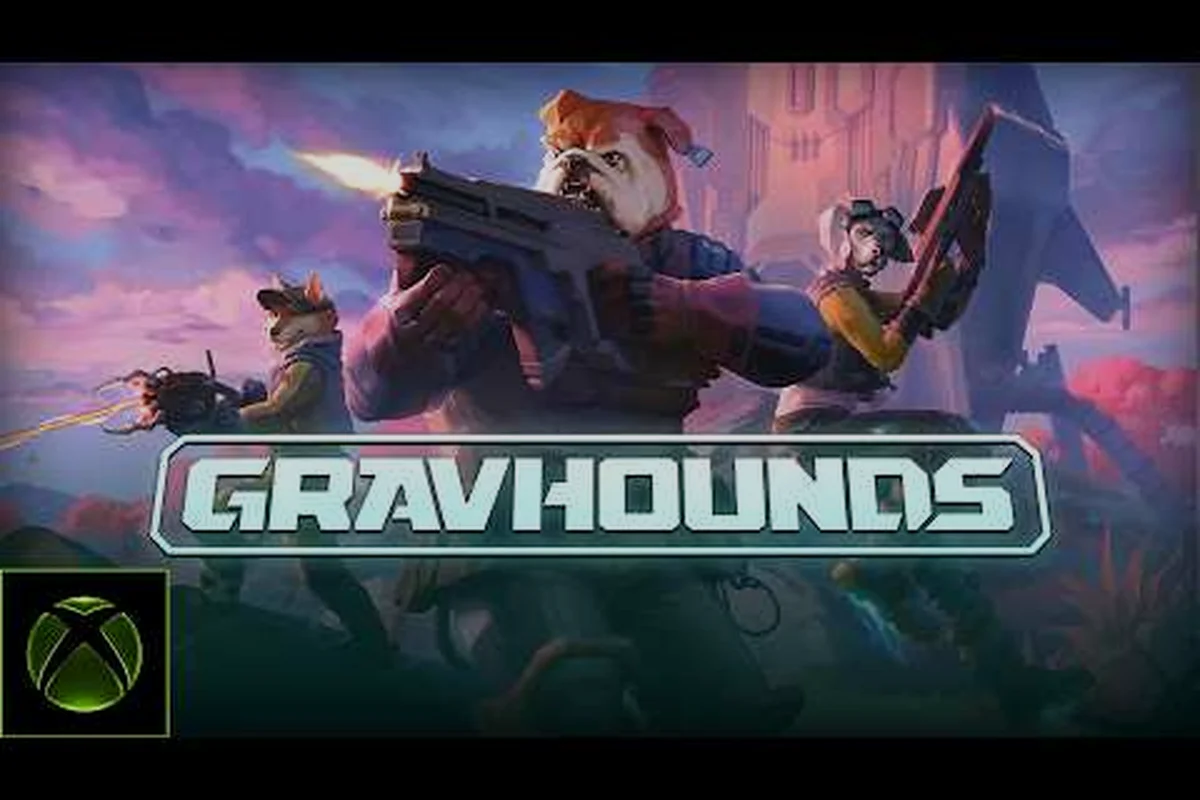
The gravhounds 1.0 release date matters because the full launch depends on the six-month Early Access plan and the developer’s ability to refine its core systems. Learn what is available now, how launch timing may change, and which signals are worth watching.
GRAVHOUNDS 1.0 Release Date and Early Access Plan
GRAVHOUNDS entered Early Access with a planned six-month development window, placing its full-release target near the end of that period. That schedule provides a useful planning horizon rather than a guaranteed launch day, because the date still depends on the quality of updates and feedback gathered during development. Understanding this distinction helps players decide whether to start now or wait for a more polished version.
The six-month Early Access window serves as the central reference point for the gravhounds 1.0 release date. Developers generally use this period to improve balance, reliability, progression, and presentation while monitoring how players interact with the available content. The official GRAVHOUNDS gameplay overview on Xbox provides a useful reference for the game’s current direction, including its character-driven action and cooperative focus.
| Milestone | Current outlook | What it means for players |
|---|---|---|
| Early Access beginning | Already underway | The playable foundation can be evaluated now |
| Six-month access window | Development period for refinement | Expect changes to balance, modes, and presentation |
| gravhounds 1.0 release date | Tentative end of the access window | Treat it as a target rather than a locked date |
| gravhounds full release | Expected after development concludes | The clearest version should include completed features and tuning |
The table separates confirmed structure from uncertainty. Early Access is already a practical stage, whereas the precise release date has not been fixed beyond the broader six-month plan. For a clearer explanation of how this launch structure works, see GRAVHOUNDS Early Access details.
What the Six-Month Window Actually Means
A six-month window is a development target, not a contractual deadline. The developers can use that time to expand character variety, adjust difficulty, improve online stability, and address issues that emerge once more players encounter the same encounters. Because early builds expose the core loop sooner, feedback may reveal balance or clarity problems that require more than a single patch to solve.
The full release should therefore represent more than a label change. A convincing 1.0 launch would ideally deliver a stable multiplayer experience, a coherent progression structure, polished visual presentation, and content that supports long-term play. The exact feature list may evolve, so any early-access feature should be evaluated as part of a work in progress rather than a final feature contract.
Release Outlook and Confidence Levels
Players can interpret the current information at different levels of confidence. The six-month structure is the most concrete element, while the exact calendar date and final feature set remain subject to change. A delay would not automatically signal failure; it could reflect a responsible decision to protect the cooperative experience when technical issues or balance problems remain unresolved.
| Signal | Confidence | Likely interpretation |
|---|---|---|
| Six-month Early Access plan | High | Broad target for reaching 1.0 |
| Exact calendar date | Low | Could shift as development changes |
| Continued feature additions | Medium | Developers are expanding the launch foundation |
| Major balance or stability work | Medium | A delay may protect the final experience |
| gravhounds full release on schedule | Uncertain | Depends on unresolved development work |
This framework prevents two common errors: treating every estimate as certain, or assuming that every delay is negative. The useful question is whether each update moves the game closer to a stable, complete state. More modes, characters, refinements, and quality-of-life features can justify continued access when they create a stronger final product.
Early Access Features and Their Launch Significance
Knowing gravhounds early access features helps players separate finished foundations from systems that may still change. The early build exposes the central action loop, character selection, progression, and cooperative play, but several parts of the experience may receive tuning or expansion. A feature can therefore be playable without being final, especially when it involves combat balance or matchmaking.
The most reliable way to interpret early-access content is to examine its function. Core mechanics should demonstrate what the final game wants to feel like, while menus, reward structures, character rosters, and difficulty settings may receive broader revision. This matters because community reactions often focus on a single number or character, while the developers may be evaluating how that element fits the entire encounter system.
| Feature area | Early Access role | Possible change before 1.0 |
|---|---|---|
| Character roster | Establish distinct combat identities | Balance adjustments, new abilities, or additional characters |
| Cooperative missions | Test teamwork and encounter design | Mission revisions and difficulty tuning |
| Progression | Show long-term character development | Reward pacing and unlock structure refinements |
| Weapons or equipment | Add tactical choices | Damage, handling, or availability changes |
| Visual presentation | Demonstrate the current art direction | Lighting, effects, animation, and interface polish |
| Multiplayer systems | Test invitations, grouping, and battles | Matchmaking, stability, and connection improvements |
The available gameplay also shows that GRAVHOUNDS is designed around distinct playable characters and active encounters rather than a passive progression loop. That foundation gives the developers meaningful subjects for balance tests, while repeated online play exposes weaknesses that cannot be judged from a short demonstration. For more detail on the access structure, GRAVHOUNDS Early Access overview explains the broader launch approach.
Character and Ability Balance
Combat balance is likely to remain active throughout Early Access because the strength of one character can affect the value of several others. Characters may gain adjusted damage, altered abilities, changed cooldown values, or different survival characteristics as matches reveal unexpected combinations. This does not mean every balance change signals a major structural problem; small adjustments often prevent one option from dominating ordinary encounters.
Players should therefore evaluate the current roster in context. A strong character against weak enemies may not perform similarly in a harder mission, and an apparent weakness may become valuable when paired with the right teammates. Community testing and player reports are useful indicators, but they should be compared with current patch behavior because earlier impressions can quickly become outdated.
Content Scope and Replay Value
Early Access also gives the developers room to test whether the available missions and encounters support varied play. A strong opening area can demonstrate the rules quickly, but a satisfying full release needs enough challenges to encourage teams to revisit stages, experiment with different characters, and refine their tactics. This is one reason content additions can be more important than a simple increase in playtime.
Mission variety should be judged by player agency as well as quantity. If several missions ask teams to use the same core sequence with only numerical changes, the experience may feel repetitive. If encounters introduce different timing, priorities, or character demands, even a smaller roster can remain engaging. The final content roadmap will reveal whether the developers prioritize breadth, replayability, or both.
How Developer Updates Affect the 1.0 Timeline
The gravhounds developer update is the clearest way to measure progress because each patch should reveal what the team considers unfinished or newly validated. Updates that add content are visible immediately, but quality improvements such as clearer instructions, better feedback, reduced loading friction, and stability fixes can be just as important for readiness. The sequence of changes matters as much as any individual feature announcement.
A useful dev log separates three layers: additions, corrections, and confirmation. Additions expand the playable foundation, corrections repair problems discovered by the community, and confirmation shows which systems now appear stable enough for players to rely upon. Reading all three together produces a better launch forecast than counting announced features alone.
| Update signal | What it reveals | Effect on the 1.0 outlook |
|---|---|---|
| New character or mission | The launch scope is expanding | Supports a fuller final experience |
| Enemy or ability retune | Balance is being tested in practice | May take additional iterations |
| Performance improvement | Technical presentation is being refined | Raises confidence in launch stability |
| Tutorial or UI revision | Player clarity is being prioritized | Supports onboarding for a wider audience |
| Bug-fix concentration | Some systems still need reliability work | Could extend the development window |
| Roadmap confirmation | The team is communicating priorities | Gives players a basis for expectations |
The gravhounds dev log should also be read for whether the team clearly explains changes. Specific patch notes help players distinguish intentional design decisions from unresolved problems, while vague descriptions can leave communities guessing about balance. Transparent communication does not accelerate development by itself, but it does make schedule changes easier to understand.
Positive Signs for an Approaching Full Release
The strongest positive sign is sustained improvement across several updates. Adding a new character matters less if earlier characters remain unbalanced, and adding missions matters less if the matchmaking experience remains unreliable. Feature depth improves when each new element connects cleanly to existing progression and cooperative play rather than appearing as an isolated addition.
Another positive signal is a clearer definition of the launch package. If updates begin stating that certain modes, characters, rewards, or tutorials are planned for 1.0, the remaining uncertainty becomes narrower. This does not guarantee an immediate release, but it shows that the developers are moving from broad experimentation toward a defined product.
Signs That Could Lead to a Delay
A delay becomes more plausible when the team discovers systemic problems, such as progression that breaks under repeated play, unstable online sessions, or encounters that rely on unclear rules. Large balance problems can also ripple across the roster, because one adjustment may change how every other character performs in team compositions.
Feature scope can create similar pressure. Each mission, character, and reward system needs testing not only in isolation but also across normal sessions and updates. When dependencies accumulate, polishing one part can expose work in another. In that situation, preserving the six-month target would require unusually smooth execution, while extending the schedule may be the safer choice for the final product.
Release Date Signals and Delay Scenarios
The gravhounds 1.0 release date should be treated as a planning estimate rather than a confirmed calendar event. The most responsible forecast uses the stated six-month window while allowing for the possibility that technical readiness takes priority. This is especially important for players deciding whether to begin progression now, purchase related products, or organize future play sessions around the launch.
A sensible signal checklist looks at stability, balance, content completion, and communication. Stability asks whether sessions and progression work reliably, balance asks whether the roster and encounters offer credible choices, content completion asks whether the package feels cohesive, and communication asks whether the team explains what remains. No single metric can determine launch readiness, because a polished interface cannot compensate for unstable co-op play, and broad content cannot repair a progression system that constantly resets.
| Scenario | Likely trigger | Practical implication |
|---|---|---|
| Earlier launch | Core systems stabilize before schedule ends | More polished content may continue after 1.0 |
| On-schedule launch | Active work stays within the six-month plan | Expected release window remains credible |
| Short delay | Final bugs or balance issues remain | Best wait is usually brief and targeted |
| Major delay | A core system needs a larger revision | Development scope or priorities changed |
| Content expansion | Developers add substantial launch features | The final package may take longer to complete |
The table highlights that “delayed” does not always mean “delayed by a long time.” A one-month extension to resolve a specific problem differs greatly from a schedule reset caused by fundamental redesign. Players should examine the reason attached to any timeline change rather than relying on the calendar change alone.
How Players Can Prepare Without Waiting
Beginning during Early Access offers the strongest view of how development progresses. Players can establish familiarity with characters, encounter patterns, cooperative expectations, and progression before the final balance pass. The tradeoff is that some knowledge may need to be revisited after updates, particularly if character abilities, equipment, or reward paths change substantially.
A practical preparation approach is to focus on cross-functional play. Test multiple characters, observe how friends use abilities, and note which encounters become noticeably easier or harder depending on team composition. This creates a more useful readiness picture than memorizing individual damage values, because tuning changes while the principles of teamwork remain relevant.
Players can also record recurring problems with enough detail to make feedback useful. Note the mission, character, team composition, platform if relevant, and what happened before the issue. A reproducible report gives developers more value than a general complaint, while the GRAVHOUNDS demo release overview can help separate temporary demo limitations from issues that remain in the ongoing build.
Early Access Features That May Change Before 1.0
The answer to what may still change in Early Access extends beyond a simple feature checklist. The launch build can retain its central identity while altering the presentation, balance, pacing, and structure of that experience. Players should avoid assuming that a familiar build will translate perfectly to launch, especially if progression depends on unlock paths or team composition changes.
Changes are most likely where the game has the most variables. Characters interact with enemies, teammates, mission objectives, and rewards, so tuning one element can influence several others. Menu changes and visual polish are easier to absorb, but systemic shifts can affect progression and strategy. Knowing which type of change is occurring helps players judge whether they need to revise established plans.
| Change category | Likely examples | Impact on early-access plans |
|---|---|---|
| Core tuning | Ability damage, cooldown, enemy health | Existing character priorities may shift |
| Mission revisions | Objectives, enemy waves, encounter rules | Previous strategies may need adjustment |
| Progression changes | Unlock pacing, reward structure | Earned resources may carry different value |
| New content | Characters, missions, equipment | Current roster may become more flexible |
| Technical polish | Animation, effects, interface, audio | Familiar experiences may look and feel better |
| Tutorial updates | Instructions, onboarding, tooltips | New players may understand systems sooner |
A six-month period is valuable because it can catch problems across different player skill levels. New players encounter confusing explanations and unclear goals, while experienced players find shortcuts, dominant strategies, and small mechanical flaws. Combining those reports gives the developers a broader view of how the game communicates and functions.
Balancing New and Returning Players
Cooperative games must remain understandable when groups include different levels of experience. If veteran players can complete every objective without explaining basic mechanics, the learning curve is too shallow; if newcomers must research every rule, onboarding is too steep. The tutorial pass is therefore a launch milestone, not simply a menu option.
Difficulty scaling can help, but it should not make clear objectives optional or turn a difficult mission into an automatic victory. Strong tutorial content teaches the cause-and-effect relationship between character abilities, enemy behavior, and objective priority. It also remains useful to experienced teams because precise communication improves when everyone recognizes the same mechanics.
Preserving Fairness Through Updates
Balance changes are most acceptable when the developer explains the reason and the size of the adjustment. A small cooldown increase may be necessary after testing, while a complete skill replacement changes the identity of a character. Transparency allows players to adapt, but meaningful patch notes also allow them to distinguish deliberate design goals from bugs.
Reward changes deserve similar clarity. If materials, currency, or unlock progress are adjusted, the developers should communicate whether existing balances remain useful and whether earned resources will be converted or refunded. Even when the exact solution is not announced in advance, acknowledging the issue prevents communities from assuming that every sudden balance change is intentional.
Practical Guide to the Full Release Outlook
Players seeking the gravhounds full release outlook should separate confirmed information, likely development work, and speculation. The six-month Early Access plan and current availability are confirmed. Continued tuning, new content, and stabilization are reasonable development expectations. A precise final date, a complete launch roster, and a guarantee of no delays are not confirmed unless the developers announce them directly.
The best forecasting method is to review each official update and ask three questions. Does the change improve the core experience, expand its depth, or clarify its operation? Then consider whether it creates new dependencies that require further testing. This prevents feature count from becoming a substitute for readiness and makes the launch timeline more grounded in actual development signals.
| Review checkpoint | Questions to ask | Positive evidence |
|---|---|---|
| Patch frequency | Are developers addressing meaningful issues? | Consistent, relevant changes |
| Feature integration | Does new content work with existing systems? | Clear rules and smooth interactions |
| Stability reports | Are recurring problems becoming less common? | Fewer serious session or progression failures |
| Balance changes | Are adjustments proportional and explained? | Clear reasons and understandable tradeoffs |
| Roadmap clarity | Is the intended launch package becoming clearer? | Defined priorities and honest expectations |
| Community feedback | Are players identifying the same unresolved problems? | Convergence rather than conflicting complaints |
The GRAVHOUNDS character tier list can help players track whether early-access balance shifts alter character priorities, although current rankings should be treated as temporary snapshots. The most reliable forecast ultimately combines release communication with repeated playtesting, because either source alone can give a distorted picture.
A Practical Monitoring Routine
Checking only the launch date is not enough; development quality is revealed by the pattern of updates. Players can review the newest patch notes every week, record the most important additions, and note whether previously reported problems receive fixes. Tracking three or four release cycles creates a stronger trend than reacting to a single announcement or temporary community complaint.
The same routine should include personal testing. Try one unfamiliar character, complete an objective in a different way, and review mission guidance for new-player clarity. This small method helps reveal whether the developers are improving depth, usability, or merely adding surface-level content. It also provides more constructive feedback than repeating a tier ranking that may already be outdated.
Preparing for Either Outcome
If the game launches within the planned window, early-access experience gives players a meaningful head start on characters and encounter logic. If development extends, the additional period should allow more content and refinement, although saved plans may need revision. Either outcome rewards adaptability: focus on learning systems rather than memorizing temporary numbers, and keep valuable progress separate from resources that could be adjusted.
Community participation also matters most when reports are specific and fair. Players can document platform, mission, character choice, and the sequence leading to a problem, while also acknowledging when a change appears intentional. This gives the developers a usable signal and helps reduce the gap between internal testing and real-world play.
Frequently Asked Questions
Has GRAVHOUNDS announced its exact 1.0 release date?
GRAVHOUNDS has provided a six-month Early Access development window, but that broad plan should not be read as a guaranteed calendar date. The exact launch timing depends on whether the developers finish tuning, content, progression, and multiplayer work within that period. Any official announcement of a specific day should take priority over this estimate.
Will the six-month Early Access period lead to a full release?
The six-month period is intended to provide enough time for meaningful refinement before the full release. It can support that goal if recurring bugs, balance issues, and missing content are resolved in time. Developers may still adjust the schedule when major problems emerge, because launch readiness should matter more than protecting an approximate deadline.
Which Early Access features are most likely to change before launch?
Combat balance, character abilities, mission pacing, rewards, and progression are the areas most likely to receive revision because they interact with the widest range of player choices. Interface clarity, visual effects, tutorials, and multiplayer reliability may also change. Players should treat current character stats and unlock paths as provisional rather than permanent.
Does a delay mean the full release is in serious trouble?
Not necessarily. A short delay may allow the team to fix a specific stability or balance issue, while added characters or missions can increase the final scope without harming the overall release. The important distinction is whether the delay reflects a bounded problem or a fundamental redesign of core systems, so the reason for a schedule change matters more than the calendar shift alone.
How can players know when the 1.0 launch is close?
Look for declining critical issues, balanced adjustments, clearer tutorials, a more coherent content package, and official communication that identifies launch priorities. New features are encouraging, but stable integration matters more than raw volume. Players should also compare recent community reports with earlier ones, since a falling rate of the same serious problem is one of the clearest readiness signals.